Shrimp


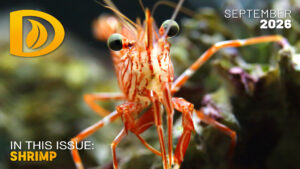
When you go to a nice restaurant, you might see shrimp on the menu. In fact, you probably have eaten shrimp before. Have you ever wanted to know more about the tasty marine creatures with delicious tails? It turns out they are some of the most interesting and fascinating creatures in the whole world, and their remarkable design could only come from the Grand Designer.
Shrimp belong to a group of creatures known as decapods. The term “decapod” means “ten legs,” and that is exactly how many legs shrimp have. There are between 2,000 and 3,000 species of shrimp in the world. The word “shrimp” has often been used to describe something very small, and for good reason. One of the smallest shrimp in the world is known as the idiomysis [id-ee-OM-uh-sis] shrimp. It has bug-like eyes that stick out of its tiny head, and a body of bright colors. It grows to be about 3-5 millimeters, or half a centimeter. What a shrimp! But, before we get too comfortable using the word “shrimp” to describe something small, there are some jumbo shrimp!
Note: Putting two words like “jumbo” and “shrimp” together is an English idiom called an “oxymoron,” where two seemingly opposite ideas are put together. Other examples would be “bittersweet,” “deafening silence,” and “living dead.”
The tiger shrimp is the largest species of shrimp in the world. It can be 12 inches long and weigh a pound. In fact, some tiger shrimp have more meat in their tails than lobsters.


The variety of shrimp and what they can do is truly amazing. There are about 150 species that create light through a chemical process known as bioluminescence. Many of these species live in the deep, dark ocean where the light from the surface does not reach. One of these species is known as the fire-breathing shrimp. “How can a shrimp breathe fire underwater?” you might ask. This shrimp has a special organ inside its body that contains the chemical luciferin. When a fish or predator attempts to attack it, the shrimp spits the chemical out of its mouth. The chemical reacts with oxygen in the water and produces a flash of light that is like a smoke bomb that startles the fish and gives the shrimp time to swim away. The “smoke bomb” is not hot and nothing like fire. It is more like what you would see in a firefly, except the “fire” of the shrimp is blue.


Also, here is a random fun fact. Maybe you have heard a person say, “You need to use your head instead of your heart in this situation.” What they meant by that was you need to think about the situation instead of trusting your emotions. But don’t tell a shrimp that, because its heart is positioned in its head!
One of the most amazing, spectacular shrimp in the world is the pistol shrimp. It grows to be about two inches long and weighs a little less than an ounce. It has a set of claws, with one—the pistol claw—being larger than the other. When a pistol shrimp feels threatened, or is trying to catch something to eat, it uses this pistol claw to perform an action that has no parallel in the natural world. It cocks the claw, then clamps it down so fast that the water around the claw shoots out in a fast-moving jet stream. The stream forms a bubble that is crushed by the weight of the ocean water that surrounds it.
This causes the area around the bubble to heat up to 8,500 degrees Fahrenheit (almost as hot as the surface of the Sun), which produces a flash of light, and makes one of the loudest noises in the entire animal kingdom. Noise is measured in decibels, and the crack of the pistol shrimp reaches 218 decibels. That is louder than a gunshot or a jet engine. The flash of light that occurs cannot even be seen by just watching the event. Special, slow-motion cameras are used to study it because it happens so fast. The light has been given the humorous name of shrimpoluminescence. You see, many animals, such as fireflies and glow worms, produce bioluminescent light, like the fire-breathing shrimp we discussed. But the pistol shrimp is the only creature that we know of that produces light, not through chemicals, but using its super-fast, bubble-powered, blistering loud, water-wave shooter.
The pistol shrimp does have its limitations. It happens to have very poor eyesight. To remedy that issue, God designed the shrimp to form a symbiotic relationship with the goby fish. A symbiotic relationship is where two or more living organisms work together to help each other. The goby fish has good eyesight and can see predators coming. The pistol shrimp is almost completely blind, but it is great at digging burrows in the sandy floor of the ocean.


The shrimp finds a goby fish friend and the two work together. The shrimp digs a nice large burrow, big enough for the goby and itself. The goby sits at the mouth of the burrow and watches for predators. The shrimp keeps an antenna on the fish so the two are in almost constant communication. When the goby spots an incoming predator, it flips its tail fin in a special way to tell the shrimp to hide. The shrimp and the goby dart down into the burrow and both live to see another day while the predator is forced to find its meal elsewhere. This symbiotic relationship did not evolve over millions of years. God designed the goby fish and pistol shrimp to work together so they could survive.
Other species of shrimp, known as cleaner shrimp, form symbiotic relationships with different kinds of fish. Cleaner shrimps (yes, you can put an “s” on the word “shrimp” to make it plural, though it is not very common) are constantly on the search for “client fish.” A client fish is one that needs the services of a cleaner shrimp. The shrimp pick unwanted parasites off the fish. In the transaction, the shrimp get to eat the parasites, which are good sources of nutrients, while the fish get their bodies and mouths cleaned of harmful parasites. Cleaner shrimp clean out the wounds of injured fish and help them avoid infection. Sometimes, the shrimp gather in a “cleaning station” on a coral reef and the fish that need cleaning simply stop by the station. At other times, certain cleaner shrimp have a special dance they do to get the attention of the fish. When the fish see the cleaner shrimp doing this swaying dance, they know the shrimp is ready to give them a good cleaning.

And one more fun fact about shrimp is that they taste good and are good for you. A medium-sized shrimp contains about 7 calories, and almost 6 of those calories are pure protein. Shrimp taste good boiled, fried, butterflied, stuffed, in dip, in scampi, baked, and bacon-wrapped with a jalapeño pepper, just to name a few ways they can be prepared.


Psalm 148:7 says that the great sea creatures ※and all the depths§ praise the Lord. Truly, the pistol-whipping, fire-breathing, fish-cleaning, burrow-building, ten-legged shrimp exhibits God’s creative talent and brings glory to its Creator.

REPRODUCTION & DISCLAIMERS: We are happy to grant permission for this article to be reproduced in part or in its entirety, as long as our stipulations are observed.